Busy parents juggling work, kids, and the intention to feel better often run into the…
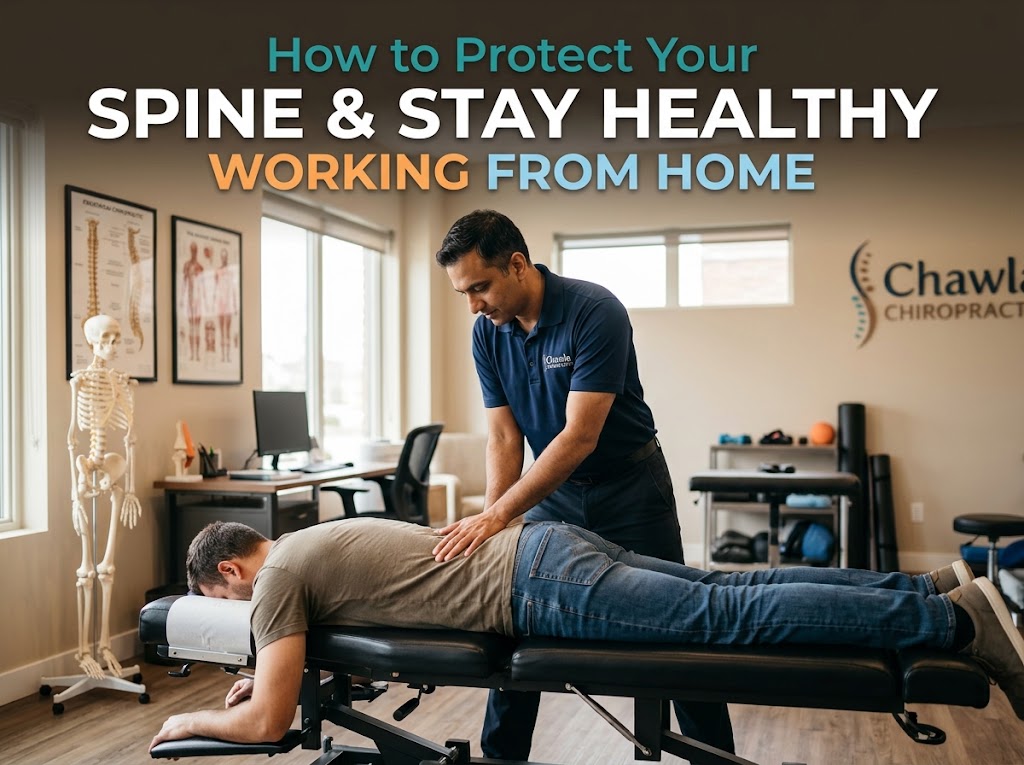
How to Protect Your Spine and Stay Healthy Working from Home
Remote workers juggling meetings, deadlines, and home life often discover the same quiet problem: a home workspace setup that looks fine but slowly grinds down the body. When home office ergonomics are improvised and work from home posture slips into a daily slouch, small aches can turn into real spinal health challenges. The tension is sneaky, work still gets done, but the spine pays for it through stiffness, pinches, and musculoskeletal strain that lingers after the laptop closes. A few smart shifts can help remote workers feel steadier, looser, and more supported from the neck down.
Quick Summary: Protect Your Spine at Home
-
Set up ergonomic home furniture to support your spine during long work-from-home hours.
-
Practice spinal-strengthening exercises to build stability and reduce everyday aches.
-
Use posture improvement techniques to keep your head, shoulders, and hips aligned while sitting.
-
Choose healthy sleep positions that keep your spine neutral and help you wake up less stiff.
-
Consider chiropractic benefits as part of a plan to protect your spine at home.
When Chiropractic Adjustments Help Remote-Work Backs
Once you’ve got the quick basics down, it helps to know what support can fill in the gaps when your back still feels “off.” Regular chiropractic adjustments may improve spinal alignment, ease muscle tension, and help reduce the nagging aches that can build up from hours at a home desk, especially when you’re pairing care with the changes you’re already making. For your next check-in, bring a simple plan to discuss: what’s been hurting, when it flares (after meetings, by day’s end), and what you want to be able to do more comfortably.
It can also help to digitize your medical records into PDFs so you can quickly share, store, and reference them. If you need to manage those files, there are online options for converting, compressing, editing, rotating, and reordering PDFs, like using an online Acrobat tool, shared for your benefit.
Build Your Spine-Safe Setup: 8 Easy Daily Habits
Your spine does best with small, repeatable supports, not one “perfect” posture you have to hold all day. Start with these habits and you’ll get more out of whatever care you’re already using (including adjustments) because your day-to-day setup stops re-irritating the same spots.
-
Choose an ergonomic chair baseline (or fake one with what you have): Set your seat height so feet are flat and knees are about level with hips, then sit back so your hips touch the back of the chair. If your chair tilts, use a slight recline (not a deep slouch) to reduce constant low-back bracing. No fancy chair? A firm dining chair plus a small lumbar support can be a big upgrade.
-
Add a lumbar support cushion and place it correctly: The goal is to support the natural curve in your low back, not to shove you forward. Place the cushion at belt-line height and scoot your hips all the way back; if you feel pressure in the mid-back, it’s probably too high. Keep it consistent, when your low back is supported, your upper back and neck usually stop “working overtime.”
-
Set up your screen and keyboard so your neck can relax: Put the top third of your screen near eye level and keep it about an arm’s length away. Bring the keyboard close enough that elbows stay near your sides and wrists stay neutral, which helps you avoid the creeping “turtle neck” posture. If you work from a laptop, even a stack of books under the screen plus an external keyboard can change everything.
-
Use a simple posture reset you can repeat all day: Try this every time you hit send: feet grounded, ribs stacked over hips, shoulders down and back gently, chin slightly tucked like you’re making a double-chin. Hold for two slow breaths, then keep working without trying to stay “military straight.” Think of frequent reminders, not rigid rules.
-
Do 6 minutes of core strengthening exercises, 3–4 days a week: Pick two moves you can do with good form, dead bug, bird dog, side plank, or glute bridge, and do 2 sets of 6–10 slow reps. Research on core stability training supports its role in reducing pain in the short term, which is why these small sessions can add up. If something pinches or shoots pain down a leg, scale it down or swap the move.
-
Break up sitting with “spine snacks” (movement that fits real life): Set a timer for 30–45 minutes and stand up for 60–90 seconds, walk to refill water, do 10 counter push-ups, or stretch your hip flexors. This matters because long, unbroken sitting teaches your hips and upper back to get stiff, making it harder for an adjustment (or your exercises) to “stick.” Your target is consistency, not sweat.
-
Optimize sleep posture with one pillow tweak: Side sleeper? Put a pillow between knees to reduce low-back twist. Back sleeper? Put a pillow under your knees to unload the lumbar area. Stomach sleeping is the toughest on neck and low back; if that’s you, try hugging a pillow and transitioning to side sleeping over a week.
-
Support your spine with healthy lifestyle habits that reduce strain: Aim for a short walk most days, hydrate, and build “micro-strength” into routines, carry groceries evenly, hinge at the hips to pick up toys, and exhale during effort. It’s worth remembering that three out of 10 American adults are active enough for health, so even modest daily movement puts you ahead of the curve. These habits make it easier to tell the difference between normal muscle fatigue and the kind of pain that deserves a closer look.
Spine-Health Questions Work-From-Home Readers Ask
Q: What’s the “right” sitting posture for my back all day?
A: There isn’t one perfect pose to hold for hours. Aim for a supported, neutral position you can return to, then change positions often. If you feel yourself tensing, slightly recline and reset your feet under you.
Q: How do I know if an exercise is safe for my spine?
A: A safe move should feel like effort in muscles, not sharp pain, tingling, or symptoms traveling down an arm or leg. Start with slower reps and smaller ranges, and stop if pain ramps up during or after. Many people do well with gentle options like Tai Chi exercise because it builds control without pounding.
Q: Why does my weight affect my lower back so much?
A: Mechanics add up fast: 4-6 pounds of pressure can be placed on joints for every pound of body weight, especially in the low back. Even small changes in daily walking, strength, and meal routine can reduce strain over time.
Q: Can my sleep position really make my back worse?
A: Yes, because hours in one position can twist or compress irritated areas. A pillow between the knees for side sleepers or under the knees for back sleepers often calms morning stiffness within a week.
Q: How often is “normal” for chiropractic visits?
A: It varies widely based on your goals, flare-ups, and how consistent your home setup is. Some people go more often early on, then space visits out as symptoms stabilize. A good plan should feel collaborative, measurable, and flexible.
Build a Simple Daily Routine for Lasting Spine Health
Working from home makes it easy to slide into “just for today” posture habits that quietly add up to back and neck stress. The way out isn’t perfect form or endless appointments, it’s an integrated spine care approach that treats maintaining spinal wellbeing as a daily spinal care routine, not a once-in-a-while fix. When that mindset sticks, motivation for posture improvement comes more naturally, and long-term back health stops feeling like a mystery and starts feeling manageable. Small daily choices protect your spine better than occasional big resets.
Experience unparalleled chiropractic care with Dr. Chawla in Danvers, MA—visit Chawla Chiropractic today to start your journey to relief and wellness!
The reason many seek chiropractic care is to prevent, manage, or treat physiological pain and discomfort, especially as it pertains to the neck, back, and spine. While here at Chawla Chiropractic, we are eager to assist in such interventions, we’re just as eager to provide solutions that you can implement outside of your chiropractic appointments, particularly in your office and otherwise.
If you want to learn more about our services, or if you’re eager to book an appointment, feel free to contact us by phone/text at (617) 334-5002, email us at drc@chawlachiropractic.com, or visit us onsite at 435 Newbury St. Suite 208 Danvers, MA 01923.
Sincerely yours,
CHAWLA CHIROPRACTIC – YOUR DANVERS CHIROPRACTOR
**The following blog article was partnered and created by Katherine Williams. You can reach her @ kwilliams@whenthebabysleeps.com and feel free to check out her Website! Featured image was AI Generated by Google Gemini.

Related Posts